
 Conference TEHI, November 07-08-Samarkhand, Uzbekistan
Pillars of Innovation: WUST Research Review-2025
Conference-AII, October 28-30, Washington D.C, United States
WUST Research Center
Conference IEEE i-COSTE December 02-04, 2025
Conference on Business Innovation-ICBIID January, 2026
IJCACI 2026 Conference, July 24-25, Alexandria
Conference TEHI, November 07-08-Samarkhand, Uzbekistan
Pillars of Innovation: WUST Research Review-2025
Conference-AII, October 28-30, Washington D.C, United States
WUST Research Center
Conference IEEE i-COSTE December 02-04, 2025
Conference on Business Innovation-ICBIID January, 2026
IJCACI 2026 Conference, July 24-25, Alexandria
Conference TEHI, November 07-08-Samarkhand, Uzbekistan
Pillars of Innovation: WUST Research Review-2025
Conference-AII, October 28-30, Washington D.C, United States
WUST Research Center
Conference IEEE i-COSTE December 02-04, 2025
Conference on Business Innovation-ICBIID January, 2026
IJCACI 2026 Conference, July 24-25, Alexandria
Conference TEHI, November 07-08-Samarkhand, Uzbekistan
Pillars of Innovation: WUST Research Review-2025
Conference-AII, October 28-30, Washington D.C, United States
WUST Research Center
Conference IEEE i-COSTE December 02-04, 2025
Conference on Business Innovation-ICBIID January, 2026
IJCACI 2026 Conference, July 24-25, Alexandria
Conference TEHI, November 07-08-Samarkhand, Uzbekistan
Pillars of Innovation: WUST Research Review-2025
Conference-AII, October 28-30, Washington D.C, United States
WUST Research Center
Conference IEEE i-COSTE December 02-04, 2025
Conference on Business Innovation-ICBIID January, 2026
IJCACI 2026 Conference, July 24-25, Alexandria
Conference TEHI, November 07-08-Samarkhand, Uzbekistan
Pillars of Innovation: WUST Research Review-2025
Conference-AII, October 28-30, Washington D.C, United States
WUST Research Center
Conference IEEE i-COSTE December 02-04, 2025
Conference on Business Innovation-ICBIID January, 2026
IJCACI 2026 Conference, July 24-25, Alexandria
Conference TEHI, November 07-08-Samarkhand, Uzbekistan
Pillars of Innovation: WUST Research Review-2025
Conference-AII, October 28-30, Washington D.C, United States
WUST Research Center
Conference IEEE i-COSTE December 02-04, 2025
Conference on Business Innovation-ICBIID January, 2026
IJCACI 2026 Conference, July 24-25, Alexandria
Conference TEHI, November 07-08-Samarkhand, Uzbekistan
Pillars of Innovation: WUST Research Review-2025
Conference-AII, October 28-30, Washington D.C, United States
WUST Research Center
Conference IEEE i-COSTE December 02-04, 2025
Conference on Business Innovation-ICBIID January, 2026
IJCACI 2026 Conference, July 24-25, Alexandria
A living, student-driven research culture built through clubs, projects, competitions, and community.
At Washington University of Science and Technology (WUST), research is not confined to faculty offices or published papers. It lives in the clubs students join, the projects they build together, the competitions they enter, and the conversations they have with peers and professors after class.
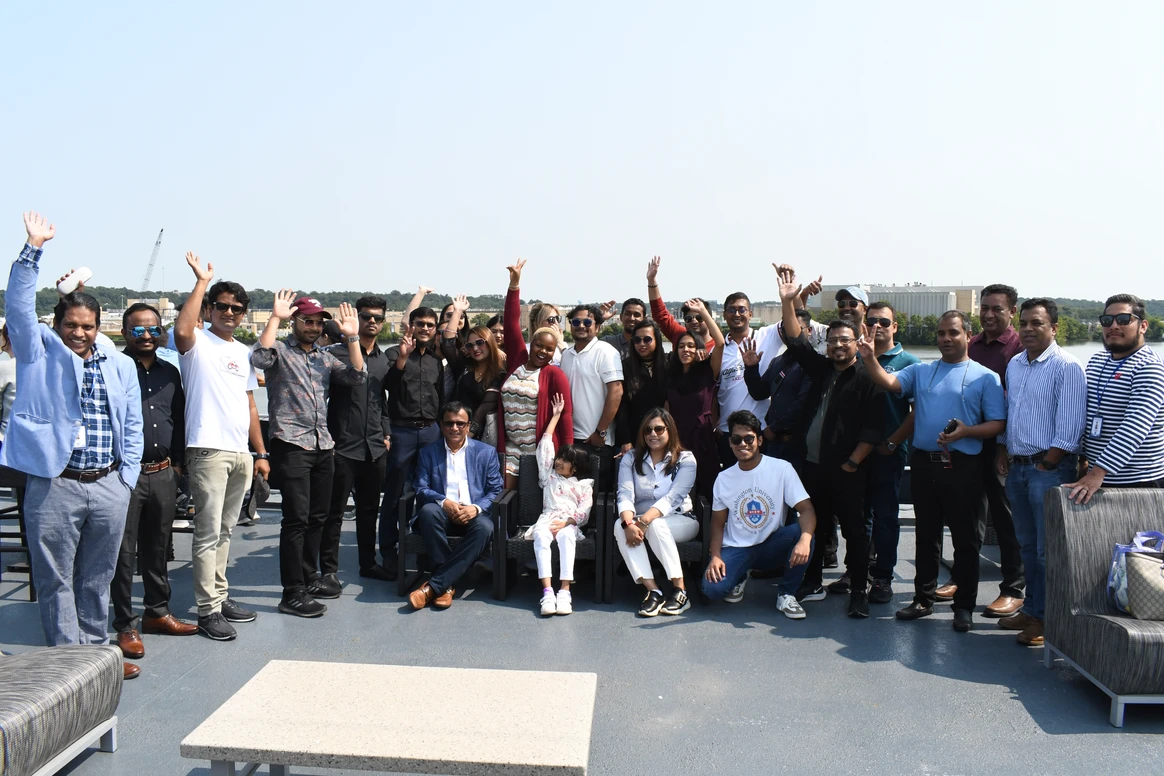
This page is the home of that living, student-driven research culture: the spaces where academic curiosity becomes collaborative action.
WUST has a number of clubs and associations for domestic and international students. These organizations are the social and intellectual heartbeat of campus life, where academic interests meet real-world curiosity.
The AI & Machine Learning Club invites students to explore one of the most consequential and fast-moving fields in contemporary science and industry. Members collaborate on projects, attend research talks, and engage with machine learning, deep learning, generative AI, and applied AI across healthcare, business, and cybersecurity.
The club connects naturally with the SCRS US Center at WUST, launched in 2025 in partnership with the Soft Computing Research Society, supporting research in AI, machine learning, fuzzy systems, neural networks, and evolutionary algorithms.
How to Join: Email [email protected]The IT Club is a hub for students in WUST's BSIT and MSIT programs and for anyone who wants to deepen technical literacy in a peer-driven, collaborative setting.
For students interested in research, the IT Club serves as an informal gateway to faculty-led projects in bioinformatics, voice authentication, multilingual machine learning, and data science.
How to Join: Email [email protected]The WUST Cybersecurity Club is one of the most research-active student communities on campus and is directly connected to WUST's professional training infrastructure through the SOC Lab.
Members develop applied skills in threat detection, vulnerability analysis, penetration testing, and incident response using tools such as Splunk, IBM QRadar, Wireshark, Nmap, and Metasploitable.
Website: soclab.wust.edu | Email [email protected]IGUISA celebrates diversity and cultural exchange through cultural events, themed potlucks, and discussions that foster community and understanding.
In the context of WUST's research mission, international student perspectives help strengthen data interpretation, problem framing, and global research collaboration.
How to Join: Email [email protected]SGA members serve as the liaison between students and university officials, shaping campus life and advocating for student needs, diversity, inclusion, and transparency.
For research-focused students, SGA is also the pathway through which new research-oriented clubs and student initiatives can be proposed and established.
Contact Student Affairs or email [email protected]The SGA actively encourages the formation of new clubs and organizations. If you have an idea for a research group, journal club, or academic interest community, reach out. The door is open.
No single space at WUST more completely embodies the integration of research and student life than the Security Operations Center (SOC) Laboratory. Located on the 3rd floor of the WUST campus at 2900 Eisenhower Avenue, the SOC Lab is a state-of-the-art facility open to students, faculty, staff, and alumni, designed not just for coursework, but for real applied research in cybersecurity.
Students practice the same skills, use the same tools, and work on the same categories of problems that professional cybersecurity researchers engage with every day.
Many cybersecurity papers published by WUST faculty and students have roots in the kind of hands-on inquiry that the SOC Lab makes possible.
The Lab hosts ethical hacking workshops, the annual CTF Competition, and serves as the organizational home of the Cybersecurity Club.
Students work closely with professors in the classroom, in the lab, and in the field. That closeness makes research conversations direct and development personal.
WUST's diverse student body is a research asset. Different disciplinary backgrounds, experiences, and ways of seeing the world produce better questions and richer collaboration.
On-campus, online, and hybrid modalities allow working professionals, international students, and residential students to share the same research projects and academic conversations.
"The culture at WUST fostered the sharing of ideas, critical discussions, and collaboration amongst diverse students and faculty across a wide range of interests."
This is the research community WUST is building: one student, one project, one published paper at a time.